
MACE portal update
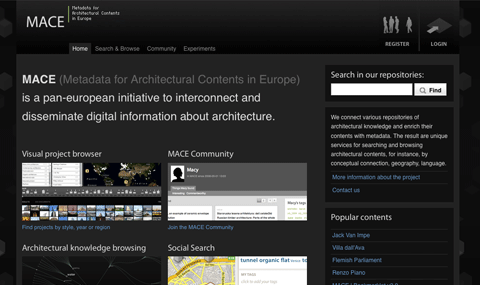
We recently launched a whole new version of the MACE portal. MACE (Metadata for Architectural Contents in Europe) is a pan-european initiative to interconnect and disseminate digital information about architecture. The idea is to connect and enrich various databases containing eLearning material for architectural contents and to connect and make them accessible in novel ways. The project is co-funded by the European commission. If you are more interested in the background of the project, you can also view our info page here. Personally, I am working half of my time on this project here at FH Potsdam.
So, let me give you a little overview of the portal:
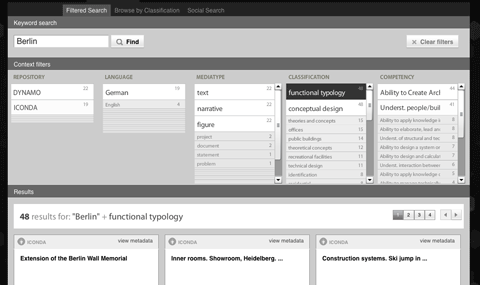
MACE users can search for contents in our faceted search application (using elastic lists, of course :). Contents can be filtered by origin, language, media type, expert classification and competencies.
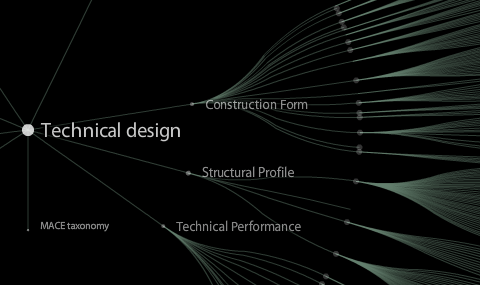
Alternatively, the portal offers a radial tree visualization of the classification taxonomy that can be used to traverse the hierarchy and find associated contents. It was built using flare, and I added some extra-nice splines and a breadcrumb branch.
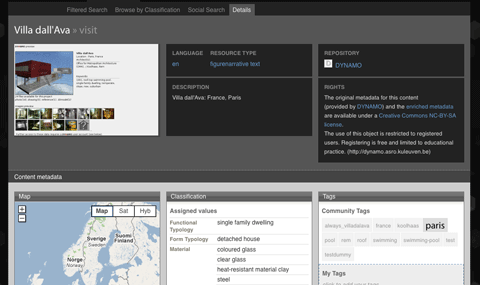
Upon clicking the header of a search result, users get to the MACE detail page, a pretty rich widget patchwork for displaying and editing the available metadata. It displays not only basic information such as language, description, usage rights etc., but also allows to associate contents with locations, classification terms, competencies, personal tags, rating and comments. The same page can be reached from a content by using the MACE bookmarklet, allowing users to tag and remember or find related contents while browsing.
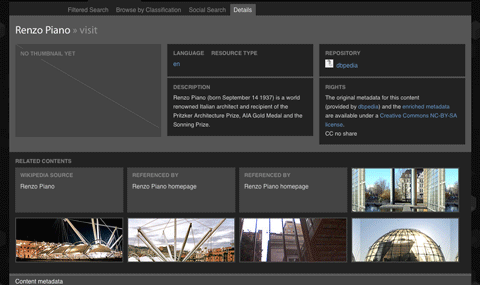
By analysing the text of resources, we automatically detect persons and architectural projects. We keep the focus to architecture by additionally querying dbpedia to make sure we actually found persons and buildings of relevance in the architectural world. Dbpedia also provides the metadata for these “real world objects” as well as some pretty well-picked flickr images via their flickrwrappr script. If you are not familiar yet with the dbpedia project, be sure to check it out, these guys are up to something.
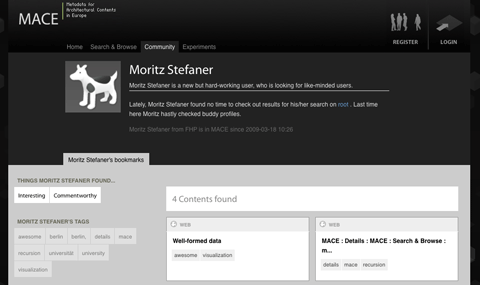
Finally, users can find their own resources, or expect those of others, on each user’s own page. It displays not only all resources and tags associated with the user, but also a personalized, automatically generated “intro text” characterizing the person’s activity on MACE.
I am responsible for concept and styling of the portal UI, implemented all the flash parts like the elastic lists and the hierarchical visualizations and also a decent amount of the crazy Javascripts driving the site. For me, it was the first major HTML/CSS/JS project in a long time, and apart from the usual frustrations with large code bases in dynamic languages, I really enjoyed working on it, and especially learning jQuery, which is almost like a new programming language on its own. Very interesting.
We will try and improve on the portal over the next 6 months, and also get a bit more experimental now that all the technology is in place.
If you have any feedback or suggestions, drop us a line or start a thread on our getsatisfaction page! And if you are interested the project and the page, make sure to register to get most out of it!
April 10th, 2009 at 10:04 pm
wow great looking site – especially the splines. Why is it so slow?
April 10th, 2009 at 10:27 pm
Thanks! What exactly do you mean – the visualization or the site as a whole?
April 10th, 2009 at 11:02 pm
I mean the server response time. Pages are taking minutes to load. I’m in Los Angeles.
April 11th, 2009 at 2:39 pm
Minutes is not good! One the one hand, we load lots of data (like the really large taxonomy), on the other hand, we will really have to look into caching more extensively, as we have quite some service calls going on in the background (distributed architecture). But thanks for the heads-up!